Identical Surroundings, Different Genetics
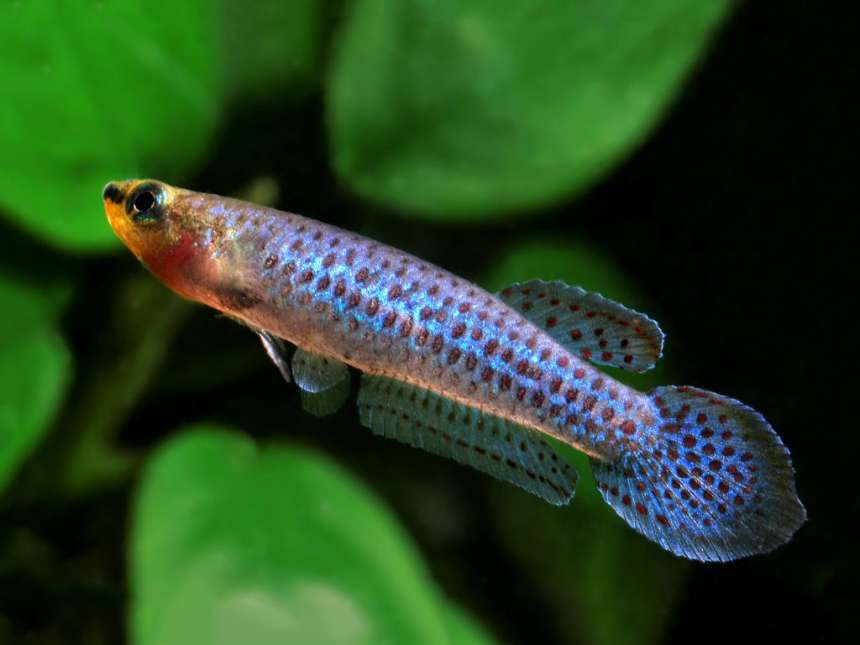
Epiplatys duboisi (pictured above) lives right alongside Congopanchax brichardi and Epiplatys chevalieri— same stretch of river, same environmental pressures. If habitat alone drove genetic diversity, you'd expect all three species to exhibit very similar complicated, structured patterns. But, if you look at the networks, E. duboisi's is comparatively simple and uniform — its populations are much genetically similar to each other (less nucleotidic differences) than the other two river dwellers.
The most likely explanation isn't related to ecology, it's history. There’s another factor at play here. Time. We think that Epiplatys duboisi arrived in the Congo Basin more recently than the other river dwelling species. If someone moved to New York 10 years ago, they weren’t here for Hurricane Sandy, and may not have stories to tell about it. Similarly, if a species hasn’t been in an area as long, it hasn’t gone through the same amount of paleoclimatic changes in the environment. E. duboisi might have missed some of the moist and arid cycles of climate periods that the two other species went through. These events shaped C. brichardi and E. chevalieri's more complex genetic patterns. E. duboisi still belongs to the habitat as much as C. brichardi and E. chevalieri do. The fish are just younger, and clearly less experienced, so they exhibit lower genetic diversity.
Looking at this fish in particular revealed something really important to us: just how many factors are involved in controlling genetic diversity. For these fish, it isn’t just a result of where they live, it’s also a result of how long they’ve been there and the history they’ve lived through. A shorter evolutionary timeline produced a noticeably different genetic outcome, reinforcing that timing and history matter as much as geography and ecology.


Comments