Research Categories

TB on the Frontlines
Institution: Wadsworth Center, NYS Department of Health
Antimicrobial Resistance is projected to cause 10 million deaths a year by 2050, and multidrug-resistant TB — already killing 1.3 million people in 2024 — is hit hardest in places with the least access to treatment (just 2 in 5 patients treated last year). I worked on characterizing contact-dependent conjugation genes conserved in M. tuberculosis, where related ESX systems drive virulence, to help identify non-antibiotic targets for drug-resistant TB. My work consisted on identifying Roles of the 2508, 61-69, 61-71 Genes in the ESX-1 cluster in DCT in Mycobacterium smegmatis

Genome Histories
Institution: American Museum of Natural History, New York City
Freshwater fish in the Congo Basin are poorly documented — which means the genetic diversity of entire species exists mostly as gaps in the scientific record. Working with a mentor at AMNH, I'm DNA barcoding six killifish species to map that diversity and trace what paleoclimactic history — shifts in temperature, rainfall, and anthropogenic impact of ming and logging — left written in their genomes. The work involves DNA extraction, PCR, purification, and sequencing; the questions underneath it involve what it means for a population to carry the memory of an environment that no longer exists. We're currently analyzing sequences for signs of a yet-undiscovered species. The posts here follow that process honestly — the protocols and the puzzles both.
Disease without Borders
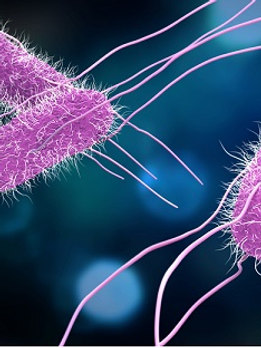
A personal experience with Salmonella Typhi acquired in India but poorly diagnosed in the US spurred an independent research project with the question: How can we expedite the accurate identification of bacterial infections acquired internationally and match patients to the right antibiotic? It took weeks to diagnose correctly in the US — weeks during which the wrong assumptions were made, the wrong treatments considered, time lost. That experience left me with a question I couldn't shake: why is identifying internationally acquired bacterial infections so slow, and what would it take to do it faster?
I built a proof-of-concept machine learning model to investigate exactly that. The posts here start with the personal story and move into the methodology: what the data gaps were, what the model did, what it couldn't do, and what that gap means for patients like the one I was.